Redmine plugin notes for delivery teams.
For teams of 10–300 running Redmine. Tips, plugin updates, and AI workflows.
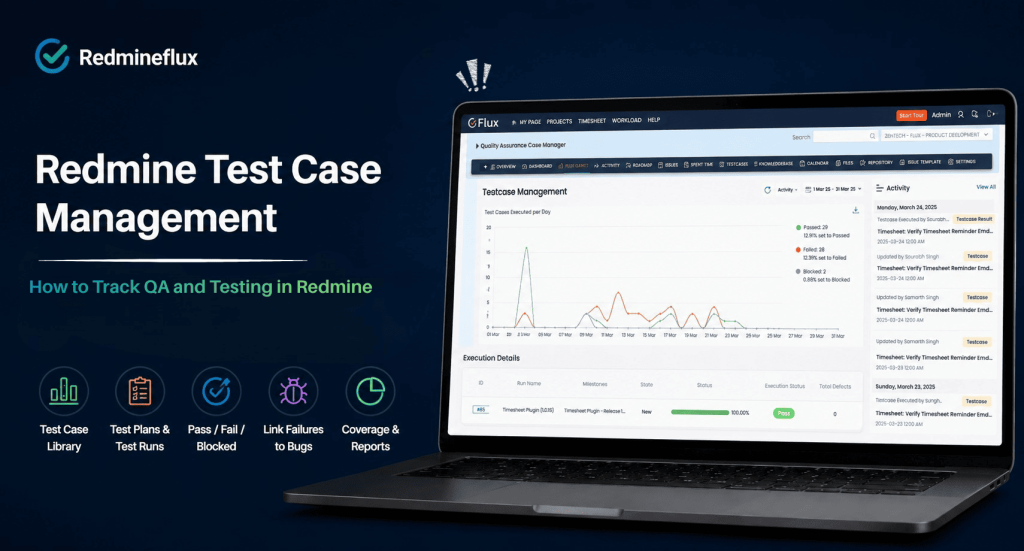
Redmine Test Case Management — How to Track QA and Testing in Redmine
Development teams that use Redmine for issue tracking eventually face the same problem when QA work grows: Redmine tracks bugs well, but it was not built to manage test cases.
Read article →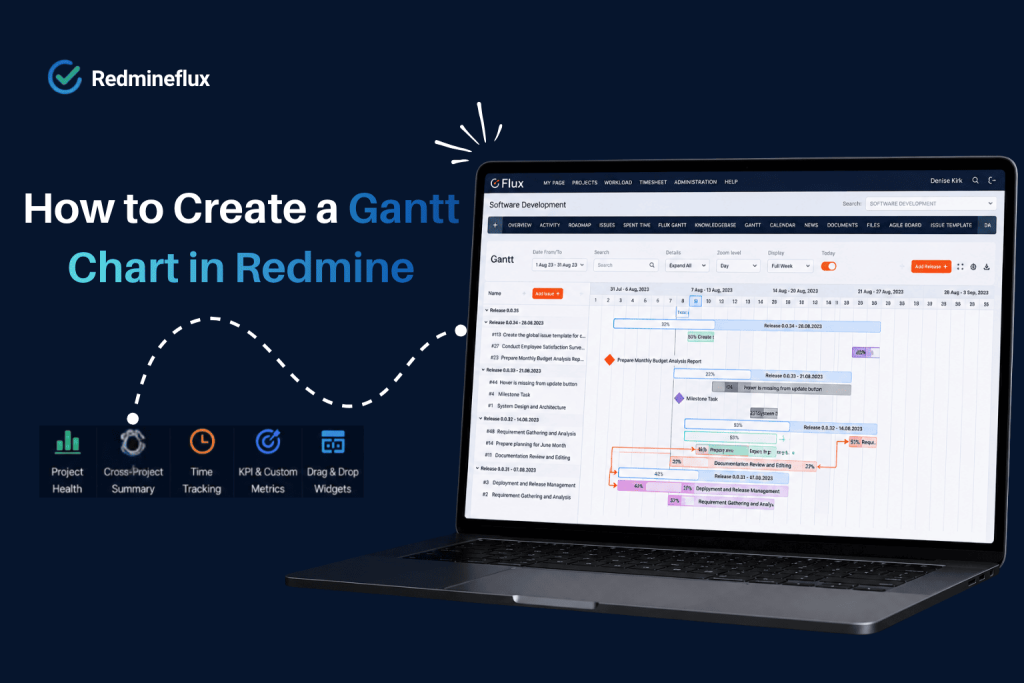
How to Create a Gantt Chart in Redmine – A Practical Guide
Redmine has a Gantt view built in. Most teams find it early, use it briefly, and then quietly stop. The reason is always the same.
Read article →
How to Build a Redmine Dashboard Your Team Will Actually Use
Redmine captures everything your team produces: issue status, time logs, sprint progress, version milestones. The problem is not the data it is the default view.
Read article →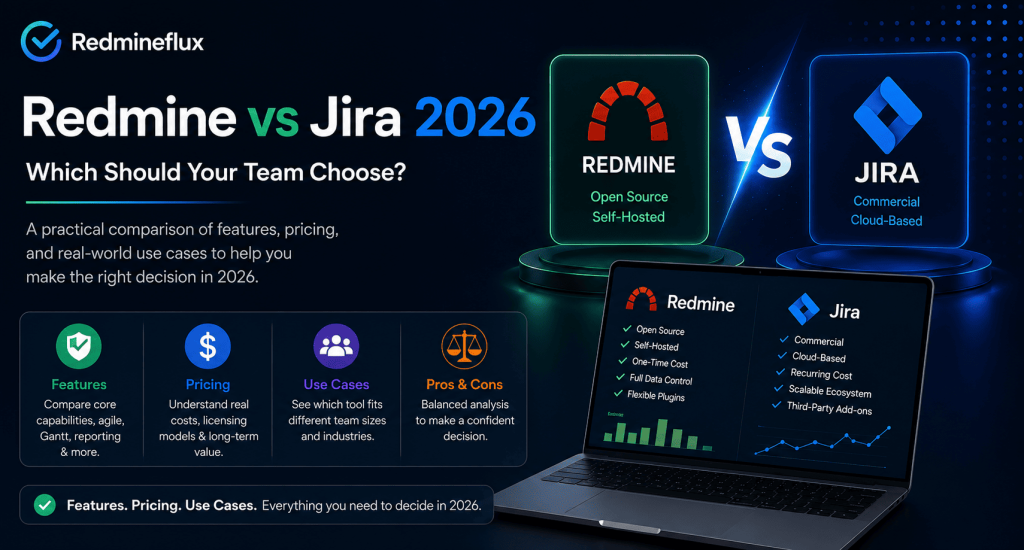
Redmine vs Jira 2026 — Which Should Your Team Choose?
Most teams land on this question the same way. They are running Redmine and someone asks whether Jira would be better.
Read article →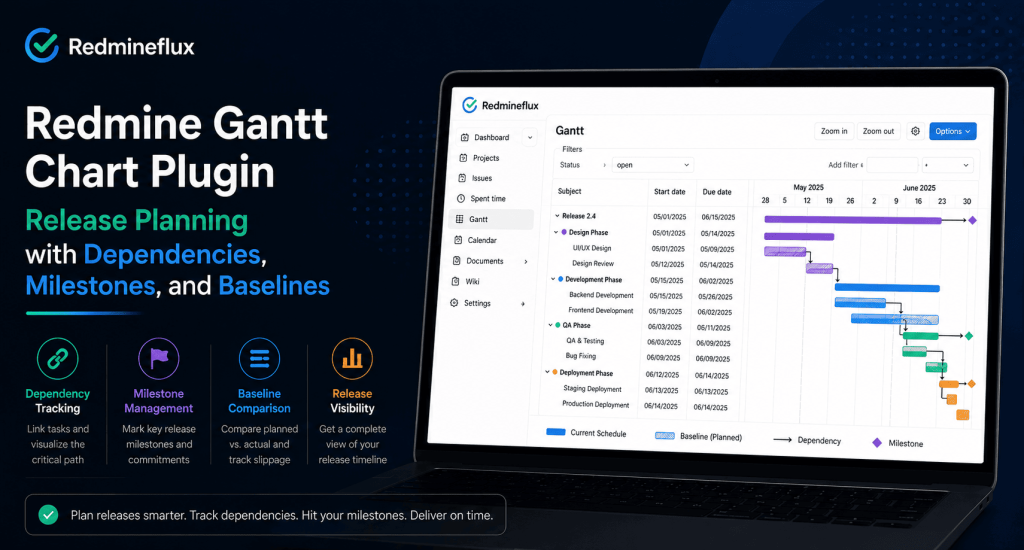
Redmine Gantt Chart for Release Planning — Dependencies, Milestones, and Baselines
Sprint planning and release planning are not the same problem. Sprint planning is a two-week cycle. The team commits to a set of issues, delivers them, and closes the sprint.
Read article →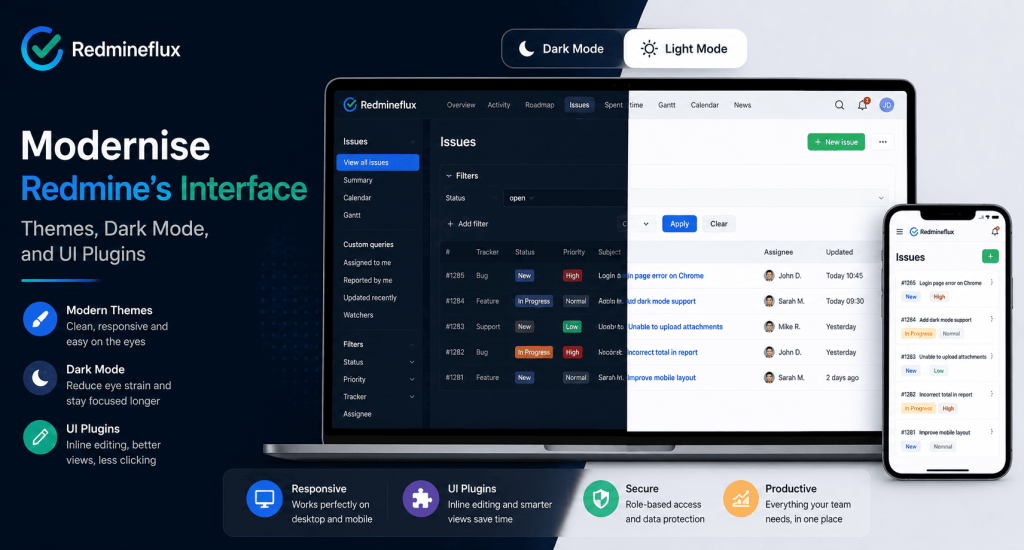
How to Modernise Redmine’s Interface — Themes, Dark Mode, and UI Plugins
Redmine’s default interface is functional. It is also dated.
Read article →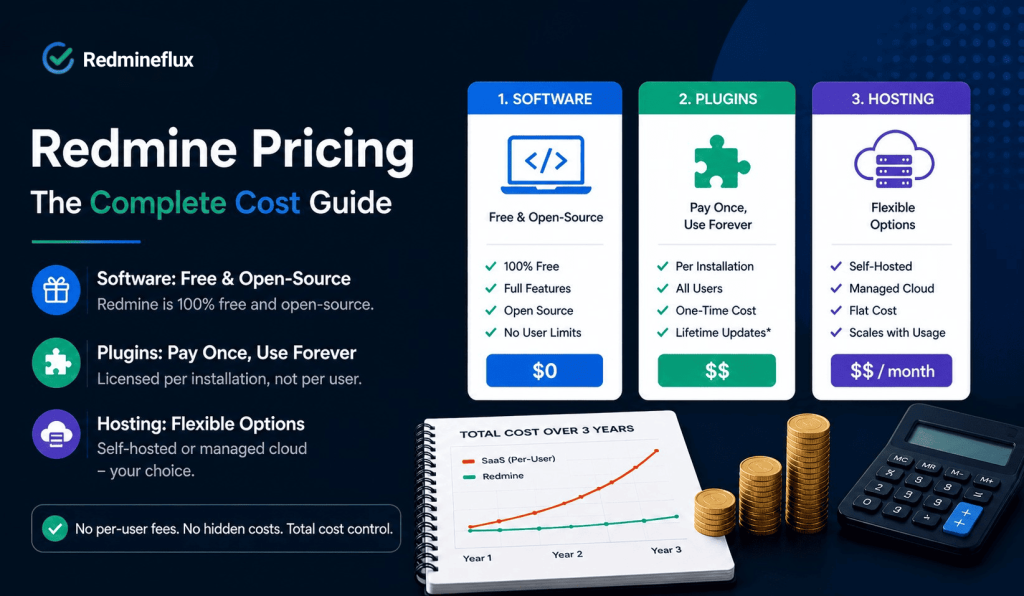
Redmine Pricing Explained — What You Pay and What Stays Free
Redmine pricing confuses a lot of teams at first. The software itself is free. The plugins are not. Hosting is a separate decision.
Read article →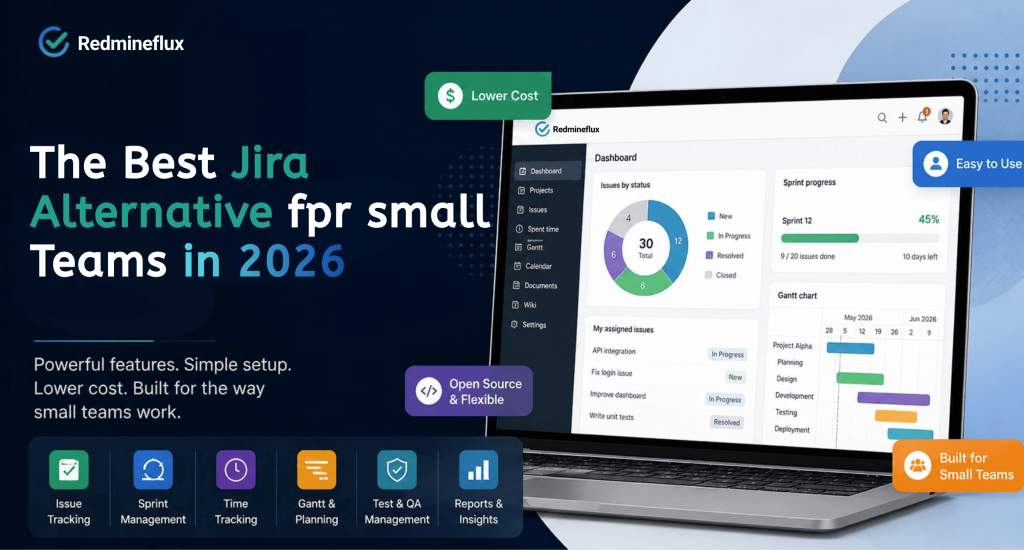
Jira Alternatives for Small Teams — A Practical Guide for 2026
Small teams find Jira the same way. Someone on the team has used it before, or it comes up in a recommendation thread, or it is simply the most visible name in the space.
Read article →No posts match. Try another word or category.
Put these tips to work in your Redmine.
Cloud from $69/month for 25 users – or plugins from $49, one-time.